Today's TOP 10 ELEMENT I'll be sharing is that of CHARACTER. We've all heard the battle discussed among agents, editors, and writers about character-driven PBs vs. plot-driven PBs. It is also possible that a PB can have a strong character without necessarily being "character-driven." I'm not really here to discuss the difference between these two "driven" factors, but I am here today to talk about character in general. And Quick, Slow, MANGO! is a good example of that.
Quick, Slow, MANGO! by Anik McGrory
Title: Quick, Slow, MANGO! Author: Anik McGrory Illustrator: Anik McGrory Publisher: Bloomsbury Year: 2011 Word Count: 619 Top 10 Element: Character
This is such a cute little book, a sequel actually, to the original Kidogo. Kidogo is the name of the little elephant, and it means "little" in Kiswahili (kee-DOE-go). That alone, screams "character"! But, it really is a good study on character. The second character in this book, the monkey, is named PolePole (POH-lay POH-lay) which means slowly, slowly.
Summary:
Kidogo the elephant's mother is always urging him to hurry up, while PolePole the monkey's mother cautions her to slow down, but together they learn that slow and fast can both be good.
This book wasn't my favorite when I first read it. It was cute. But the more I read it, the more I noticed how every intricate detail was placed just so. It's a good study on patterns, as well.
Spread 2:
Kidogo gathered his trunk and slipped slowly down the riverbank. On his way, he found
a butterfly...
...and a stick.
He stretched his trunk.
And said hello to a passing snail.
"Hurry, hurry," his mama called again. "Drink up now, or else we might miss breakfast."
This gives a glimpse of what Kidogo's character is like. He takes his time and notices things.
Spread 4:
Then PolePole spotted mangoes in a tree nearby. She rushed to grab all the ones she could reach. But while she rushed, she didn't hold on well.
And the mangoes slipped and fell.
As more and more mangoes fell, PolePole scrambled to pick them faster and faster.
but as she picked faster and faster, more and more mangoes fell!
And thus the conflict begins and the story ensues. The BEST books will have a 9 of the 10 elements in them (not all books rhyme), but usually one element will stand out as the strongest throughout the story.
The book then goes through several spreads of Kidogo's day showing all the ways he takes his time and is slow to follow his mama. Then later, PolePole "dashed at the very last mango. It flew through the air. And so did PolePole."
And then, on spread 10:
Kidogo watched the funny monkey bobbing down the river swiping at the mangoes.
Slowly, slowly. He waded deeper.
He found a stick.
He stretched his trunk.
He pretended he was a rock...
Kidogo "stops" all the mangoes and PolePole learns how to be slow and get the mangoes too. Finally their mamas find them and see that they have worked together to catch all the floating mangoes. And here's a hint at theme and the ending:
"Yes, Kidogo, sometimes slowly slowly can also be just right."
It really is a very cute book. No wonder Kidogo is so loveable! My daughter especially loves it because of the elephant and the monkey. The very nature of their characters plays straight into the plot line.
Here's the link to add your own DAY 4 blog posts...
Ya'll are all doing an awesome job of sharing all the BOOK LOVE!!! Let's continue, shall we?
Vulture View by April Pulley Sayre
Title: Vulture View Author: April Pulley Sayre Illustrator: Steve Jenkins Publisher: Henry Holt and Company Year: 2007 Word Count: 180 Top 10 Element: Patterns
This book also includes rhyme and word play, but I think the Element #8: Patterns is more prevalent. That may seem hard to do with only 180 words, but April Pulley Sayre pulls it off beautifully.
Patterns is an element in which you can utilize repetition, utilize a circular pattern, or any number of other patterns. Vulture View definitely has a circular pattern that links the beginning and ending to each other, as well as a nice use of rhyme and repetition.
The first spread opens:
The sun is rising.
Up, up.
It heats the air.
Up, up.
Second spread:
Wings stretch wide
to catch a ride
on warming air. Going where?
Up, up! So they can...eat!
It asks, "Over there? (It is actually more specific, but with a book this short, I can't quote the whole thing.)
No, no. (a repeated pattern of the phrase up, up.)
Again. Over there? No, no.
And a THIRD time...over there? No, no. (So now you get your patterns of three, too!)
It continues by stating something that vultures:
sniff, search, seek for foods that...
...continues to next page to answer the page turn suspense.
...REEK!
Then again with the questions repeated 3 times, this time for guessing what kinds of foods.
flowers? No, no.
smoke? No, no.
dead deer? Yes, yes!
And the next page begins with this line:
Vultures like a mess. (rhymes with yes)
Next couple of spreads share things vultures do (again). This book is educational, after all.
And then a page ends with:
But soon...
And you get another page turn.
...the sun starts to sink.
Down, down.
There's that pattern again. No, no. Yes, yes. Down, down. And THIS pattern is also a pattern of three - used 3x in the book - 3 examples of the repeated word.
And then it repeats the opening question, which is also similar to "over there?"
Going where?Going down, down, down!
Until...
Another page turn.
...the morning sun rises.
Up, up.
"Up, up" is repeated 3x on this final page. It also repeats the phrase "Going where?" again for a 3rd time of its use as well.
I tried to include as much as I could without giving away all 180 words. Hope it still makes sense and that you get a sense of how awesome this book is for patterns.
Remember to add the linky list at the end of your own post by copying/pasting from above. Also remember to add your blog link to the list below. See ya soon! And keep on keepin' on...
Good morning! As we blast into day 2, remember that you can stock-pile your posts and schedule them ahead of time, which is what I'll be doing this afternoon. Rushing to write my post the morning of is just not working out for me (*hides head in shame*).
About the link: if you can't get it to work, don't worry about it, but at least give it a few tries for a few days. It won't affect you winning any prizes. Yes, it will make it easier for others to hop around from blog to blog, and yes it will allow people to attach their blog posts from your site as well. But, seriously, if you can't get it to work, don't stress over it and don't worry about it. We want this challenge to be FUN and EDUCATIONAL. That's the important thing. The problem about the link lies in the fact that I wasn't able to find an easy way to let you guys copy/paste it. But I think I finally figured it out. Let's try this:
Title: Swirl by Swirl: Spirals in Nature Author: Joyce Sidman Illustrator: Beth Krommes Publisher: Houghton Mifflin Books for Children Year: 2011 Word Count: 153 Top 10 Element: Patterns
This is the perfect book to go along with an art lesson. Not only are spirals a naturally occurring pattern in nature, but the text has patterns as well.
The book begins with:
"A spiral is a snuggling shape. It fits neatly in small places. Coiled tight, warm and safe, it waits..."
And continues onto the next spread:
"...for a chance to expand." And the snake is shown slithering off into the spring time.
Here is the next spread:
The following spread shares what happens next, but with the example of a fern.
The pattern continues, by listing different things a spiral is, with examples of each. Several of the "list items" (i.e. "spreads") utilize the elipses..., but not all of them. This convention helps add suspense for the page turns.
In the back matter of the book, the pattern is expounded upon for each "definition."
...is a snuggling shape (with 3 examples)
...is a growing shape (with 2 examples)
...is a strong shape (with 4 examples)
...reaches out (with 3 examples)
...is clever (with 2 examples)
...is beautiful (with 1 example)
...moves (with 4 examples)
The back matter is fascinating!
So, what can we learn from this amazing little science gem of a book? That it doesn't take much to implement a pattern into your own writing. Whether it be with a page turn, by repeating the definition in different ways, or by repeating the sentence structure. If one of your own manuscripts is missing something and you're not quite sure what it is, try implementing some type of pattern into it. Experiment and have fun with it. You won't know what you can actually accomplish, until you give it a try!
And here's a book talk I found on YouTube. Enjoy!
Here's the link to add your own Top 10 Element example. Keep on keepin' on...
Read, study, and share 14 picture books in 14 days
Hoppy Valentine's Day! Welcome to day 1 of our blogging extravaganza. Vivian Kirkfield has blogged with us today to kick off week 1. As soon as you have your book ready to share with us, post your blog on your site, and then paste the specific link to that specific post to the linky at the end of today's post. Remember to hop over to everyone else's blog to maximize your learning potential for this event. Take it away, Vivian!
Oh, a quick P.S.
PLEASE PLACE THIS CODE AT THE END OF EACH DAY'S POST SO THAT PEOPLE CAN HOP FROM BLOG TO BLOG MORE EASILY. IT WILL ALSO GENERATE A LOT MORE TRAFFIC FOR EVERYONE TOO. I'LL PUT A NEW CODE FOR EACH DAY.
Do you ever wonder what makes children choose a particular book to read? Or what causes them to ask for the same story over and over again?
Knowing the answers would probably be very helpful as we write – since our goal is to craft stories that will inspire children, bring a smile to their faces, and have them pluck OUR book off the shelf and say to their parents, “Please, read this one again!”
So I did an experiment with my six-year old grandson. I laid out ten picture books and gave him a bagful of coins. I asked him to put a coin on the books he had enjoyed hearing and add more coins to the ones he would like to hear again. Every book had a pile of coins, so we sat down to talk about why he wanted to hear all of them over and over.
“The aliens are funny and scary!” (CHARACTER)
“Poor Mr. Tiger missed his friends!” (CONFLICT)
“It was awesome when the policeman didn’t know the frogs flew, but the dog did!” (PLOT)
“The man in the yellow hat is always telling George to stay out of trouble and George is always getting into trouble anyways.” (DIALOGUE)
“Going to sleep isn’t fun but counting animals is.” (THEME)
“I knew something was going to happen when the lights when out.” (PACING)
“Grammy, do you know that a troop is a group of monkeys?” (WORD PLAY)
“I love when Peter Panda melts down!” (PATTERNS)
“One big pair of underwear!” (RHYME)
“Little Chick proves he is brave in the end” (BEGINNINGS and ENDINGS)
Each thing he said related to a different element of the story. If a book contains a great mix of these important elements, children will want to read it.
And what are those top story elements? Here is Christie’s list of ten:
1.Character
2.Conflict
3.Plot
4.Dialogue
5.Theme
6.Pacing
7.Word Play
8.Patterns
9.Rhyme
10.Beginnings and Endings
By studying different picture books, we’ll discover in which elements they shine...in doing so, we will be better able to include these important elements in the stories we write.
Another important element that impacts a child’s decision (and a parent’s) to grab a book from the shelf is the cover. As writers, we don’t have much, if any, input on this part of the process (unless you self-publish), which is probably why Christie didn’t include cover or illustrations as important story elements. Interestingly, the cover of one of these books was NOT what I’d think a young kid would like – dark blue and black with a bit of white. Yet Jeremy picked this one immediately when I first brought them home, even before we had read it. It’s considered a mystery...and the cover conveys that idea perfectly.
But it’s no mystery that if we can include these ten important elements in picture book stories we write, editors will be grabbing them for publication and children will be begging to hear them, over and over again.
Right now, I’m off to read some picture books (hurray!) so that I can write my blog posts during the next two weeks of this challenge. I’m looking forward to reading all of yours! Thank you so much, Christie, for having me here today. I hope I shed some light on the importance of those story elements in picture books, from the POV of someone in their target audience.
Thank YOU, Vivian for being here. I loved your experiment. That was SO awesome!
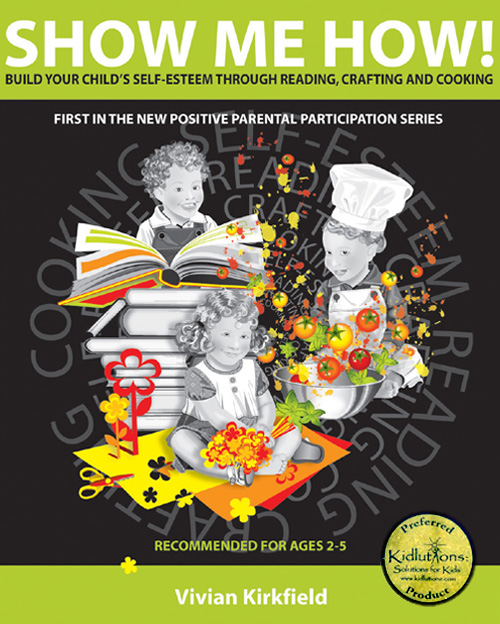
Vivian Kirkfield loves being surrounded by picture books and children. A former kindergarten teacher, she has a master’s in early childhood education...and when she isn’t scribbling stories, she is hiking and fly-fishing with her hubby, reading, crafting and cooking with kids, and sharing self-esteem and literacy tips with parents and teachers. Although she is not a fan of heights and was always a rather timid child, Vivian is constantly taking leaps of faith. In 2010, she self-published her award-winning parenting resource, Show Me How! Build Your Child’s Self-Esteem Through Reading, Crafting and Cooking...three years ago, she went skydiving with her son...in May of 2013, she flew half-way around the globe to speak at the 2013AFCC/SCBWI conference in Singapore...and she is amassing a respectable pile of lovely picture book manuscript rejections. To learn more about her mission to help every child become a lover of books and reading, you can follow her on Twitter, connect with her on Facebook, like her Show Me How page on Facebook, visit her blog at Picture Books Help Kids Soar or contact her by email.
It's funny Vivian should mention the book, Tuesday, by David Wiesner. The first writer's conference I ever went to had an author who mentioned this very book as her "IN" to children's writing. That book turned her into a published author, it affected her so strongly. In addition, I believe it is a wordless book as well. Thanks for the memory. The book I have in mind for today, also has a dark cover of blue and black, with a bright moon shining in the center.
(Remember to post the cover of the book, the year and the publisher, and the word count, which you can usually find at Rennaissance Learning. Otherwise, just estimate, but say est.)
Once Upon a Twice
by Denise Doyen
Title: Once Upon a Twice Author: Denise Doyen Illustrator: Barry Moser Publisher: Random House Year: 2009 Word Count: 555 Top 10 Element: Word Play and Rhyme
I absolutely love this book! The language is so fun and nonsensical, but also eerily lyrical. A true masterpiece. It can also be a study on rhyme. It's not your typical ABAB metrical rhyme scheme. Lot's of internal rhyme, as well as end rhyme. Let's dive in, shall we?
The first page:
Once upon a twice, In the middle of the nice, The moon was on the rice And the Mice were scoutaporwl...
Already, you can see what I mean. Here is a list of all the fabulous wordplay examples:
runtunnel through the riddle
inbetwiddle
whilst he goofiddles
qui-ettiquette
eldermice
a riskarascal in repose
preycautions
mouse-scallywag
jammed in the middle (they call him Jam Boy)
dangershine of Moon
the elder mouncelors whispercroon
jaw-claws
renounce jamfoolery
the knot of mice comes quick undone
Jamagination in a flurry
furry overconfidence
sneaks un -aware, -afraid, -asham'd
will fuel bravado, mouse misdeeds (love the alliteration and consonance)
wisenmouse
esses 'cross the pond unseen
espies the furlickt mouse's sheen
there's a roil!---a coil!---a lash!
scritchscrambles in a log!
heart a-poundin', mind a-fog
grasshadowed halls
Keeper-of-the-Song
wanderyonder
a nightly knightly duel and joust
dangerouse
mice-advice
Oh, yeah...!
So for double the fun, here are the rhymes:
twice/nice/rice/scoutaprowl
riddle/inbetwiddle/middle/howl
matter/shattered/chatter/crawl
repose/rose/knows/all
drag/flag/mouse-scallywag/anything
surround/bound/profound/sing
moon/June/whispercroon/fear
lettuce/get us/menace/disappear
wink/pink/brink/play
pounce/ounce/mouse/stay
undone/run/fun/fence
flurry/scurry/worry/overconfidence
Jam/lam/-asham'd/reeds
rules/jewels/dewels/misdeeds
clear/fear/ear/hisssss
queen/unseen/sheen/miss
lash/dashes/splash/a-deep
beach/screech/teach/a-sleep
a log/a-fog/frog/dawn
walls/halls/all/gone
long/song/wrong/ham
awake/snake/lake/jam
dangerouse/mouse/joust/mourned
twice/nice/rice/forewarned
And there you have it folks! Word play and rhyme. Here's a bonus. Denise asked me to read her book for her YouTube channel. So here it is for today, as well. Enjoy!
So, here's the Linky list to add YOUR book for today! Keep on keepin' on... See you tomorrow!
Remember, two winners for week 1. Just blog 5 out of 7 of the days. Same for week 2. Grand prize eligibility, blog for 5 out of 7 days for both weeks to be eligible. 14 out of 14 gets you two extra entries. Want to win? Sign up here!
Hope to see you there! Only three days left to sign up. Share with your friends. And keep on keepin' on... Sign up here!
PB 14:14 Book Love. Craft Love. Writer Love. Share the LOVE.
The Valentine Vision:
Read, Study, and Share
14 picture books in 14 days
PB 14:14 is a blogging challenge. A blog hop. A learning adventure about books and craft ...with PRIZES!
It's almost as stupendous as Susanna Leonard Hill's Perfect Picture Book Friday reviews, as purpose-driven as Mandy Robek's August Picture Books 10 for 10, as momentous as Tara Lazar's PiBoIdMo, as profound as Paula Yoo's NaPiBoWriWee, as intense as Lora Koehler's and Jean Reagan's Picture Book Marathon, as ambitious as Julie Hedlund's 12 x 12, and as influential as Dianne de Las Casas' Picture Book Month.
PB 14:14 is COSMIC!
This is not a simple book recommendation event. It's a 2-week picture book blogging extravaganza. It is a specific type of book "review" for WRITERS! For as many days as you can, post your own "review" (as explained below) on your own blog and link it back to the daily linky list so everyone can hop to each other's blogs and learn more about the craft of picture book writing.
Who Can Join
Anyone who blogs, reads, writes, or breathes picture books. Simply read a book, study it, and share what you have learned with everyone else, much like I have done on my Top 10 Story Elements for Picture Books series.
Each person will be writing their own recommendations, or lessons to share on their own blog and linking that post back to the linky list for that day so that we can all hop over to each other's blogs and learn more together than we ever could have alone.
Purpose Behind the Event
There are SO many picture books out there that I would LOVE to read and study, but simply don't have access to them. I'm hoping this will open up a lot of doors - er...books - to all of us. My library can NOT get any book I want. I'd have to buy it or make a trip to the bookstore and hope they had it in stock, JUST TO READ it. This way, we can all share our access to the best of the best books and learn more about great craft and skill than we could on our own.
How to Write Your Blog Post
Each book must be able to teach by example a short lesson on one of the Top 10 Story Elements for Picture Books. Include the title, author, illustrator, publisher, year, and word count, and an image of the cover. All books must be within the last 10 years. 2005 and forward. Please follow the examples of my previous Story Elements posts to the right. Just click on an element and read a post or two. Just share what feels right and most helpful, but certainly don't quote the whole book, or even half the book. A few quotes are good. Help us LEARN. Help us SEE. What can we emulate to become better writers for that element? SHARE with us what you found most helpful.
Top 10 Story Elements
#1: CHARACTER
#2: CONFLICT
#3: PLOT
#4: DIALOGUE
#5: THEME
#6: PACING
#7: WORD PLAY
#8: PATTERNS
#9: RHYME
#10: BEGINNINGS AND ENDINGS
RULES and PRIZES
The goal is to find 14 picture books published in 2005 or later. Each day, you will write a blog post about that book and recommend it to writers to use for studying one of the top 10 story elements for picture books. You can focus on two elements max, if you're having a difficult time choosing between two.
To be eligible for prizes, you must post at least 5 out of the 7 days in that week to receive one entry. If you post 7 out of 7 days for that week, you will receive 2 entries. All winners will be chosen randomly.
There will be 5 winners total. All prizes will be announced on the 28th!
2 first week winners (14th-20th): 1 picture book, and 1 critique
2 second week winners (21st-27th): 1 picture book, and 1 critique
GRAND PRIZE winner:
a book about craft, business, or inspiration
a critique
a special Top 10 Story Elements wall calendar
free tuition to an online picture book craft writing class
To be eligible for the grand prize, you must have at least 10 out of 14 blog posts (5 each week). Those who have 14 out of 14 will get TWO extra entries. Good luck and may the muse be with you!
When to Start
Basically, you can start right now. But, technically, you won't be able to post anything until 2.14.15. Scour your shelves for the best books. Choose which one or two elements each book will teach. It's okay if someone chooses the same book as someone else. One person might choose it to teach rhyme, whereas another might teach character. Do what you feel the book compels you to do. You can actually start writing the blog posts NOW. Just save them as drafts and schedule their publish dates for later. Don't publish them now. Wait until the 14th and do one a day.
Sign Up Now
Simply sign the linky list below with your name and a link to your blog. More details will follow on how to add your individual blog posts closer to the 14th. If you have any questions, leave them in the comments. You have 2 weeks to sign up and 2 weeks to participate. The deadline to sign up is Valentine's Day at midnight.
It's baaaaack! Yea for picture books! It's that time of year again, to spread the love about writing and reading the best children's literature on the planet: picture books.
Registration for PB 14:14, a Blog Hop with PRIZES, will open on February 1st. 14 picture books in 14 days. The hop will begin on 2.14.2015 and will last for 14 days. Prizes will be announced on 2.28.2015. I will give more details later. In the meantime, read more picture books! Check them out from the library. Borrow your neighbor's. Get a stack going. 2005 through 2015 only. Same rules as last year, but I'll remind you of them soon. Stay tuned...
What's in store for you?
Guest blogger(s)
Picture book giveaways
Critique giveaways
Books
Calendars
ONE BIG SURPRISE (coming soon)
5 participants will become *WINNERS (but really every participant is a winner)
Merry Christmas! If you received a poinsettia this year, please don't throw it away in a week or two, or even in a month or two. This article came from SheKnows.com and I am sharing it to help preserve the poinsettia's life span. I received a beautiful poinsettia last year, and this year it is still alive, but not thriving. So I did a Google search and found this article. Next year, I hope to have less leggy stalks, bigger blooms, and lots of big red leaves. Enjoy, and good luck! January/February/March
Simply continue to water the poinsettia as you would any plant, never allowing the soil to completely dry.
April
Now it needs to hibernate a little. So to help it go dormant, beginning April 1, gradually decrease water, allowing the soil to get dry between watering. Be careful the stem does not begin to wither. Should this happen your plant is rejecting your efforts, thus declining fast. After a couple of weeks, the plant will have got use to this drying process, so you can move it to a nice coldish place that stays around 60 degrees F (best bet may be against an outside wall, and definitely out of direct sunlight.) Water very little, never soaking or allowing it to sit in water. May
About mid-May, cut all stems back to finger length (about 4 inches.) To be ready for the plant's eventual growth spurt, take this time to repot the poinsettia in a somewhat bigger container. If it is still in the plastic pot, I switch it into something more decorative, too. Take your time and water well to wake it up. Now you can bring back to the sunniest spot you have in your home, this will keep it at a temperature up to 75 degrees F throughout the summer and into September. Continue watering on a regular schedule. You should soon begin to notice some regeneration — stalks, sprouts or leaves. June
You can now move your poinsettia outside for a summer blast of sunshine and temperatures. Keep it in a partially shaded location (never direct sunlight). Water regularly. July
Right after July 4, take a moment and cut back each stem the length of your thumb tip. It's tempting to leave the growth, but if left uncut now, the poinsettia will grow rather leggy and lanky. August/September
By mid-August, each branch will have new growth. Once again, pinch or cut them back to a small handful of leaves on each shoot. Now's the time to bring the plant back inside (so the temperature remains regular) and place in your sunny window. Water regularly. October
To get poinsettias to re-bloom, at this point they must be limited to 12 hours or less of sunlight per day. This might sound tricky, but all you have to remember is that starting October 1 until almost the end of November, keep your plant in complete darkness from 5 pm to 8 am. November
The last week in Nov. you can keep the poinsettia in the window full time. You should see several flower buds now. December
Continue to water it the way you did when it was new — and enjoy as it continues to bloom throughout the season!
QUESTION: Did YOU give or receive a poinsettia this year? (Or even last year?) Say, "Me!" if you will join my mission to keep your poinsettia alive all year and see if you can "bring it back" next year!
This article was originally published as "Poinsettias: How to keep them thriving year-round" at SheKnows.com on Nov 27, 2012 by Mar Jennings. You can read the full article, which includes fertilizer information, a little history about the plant, and a blurb to make you WANT to keep the plant all year.