Wednesday, May 11, 2011

Skippyjon Jones

This week's READ-4-LUCK pick is Skippyjon Jones by Judy Schachner. I first read this book about a year ago in a bookstore. I knew it was a big seller, very popular, and had multiple sequels. My first impression is that it was weird. And long. But it's grown on me. I love Skippyjon!
Skippyjon Jones, is sent to his room to contemplate what it means to be a cat, but instead embarks on an imaginary adventure in which his Zorro-like alter ego, El Skippito, rescues a group of chihuahuas from a bean-eating bumblebee.
Publisher: Dutton
Year: 2003
Word Count: 1073
Book Level: 3.3

RATINGS
CHILDREN:  My daughter's been checking these out from her school library (preschool) for months now. I've read Mummy Trouble and Lost in Spice now, too. Children love looking at the animals. My son loves the action scenes.

PARENTS:  I love reading the Spanish parts! It's so fun to read over and over again (but not every night).

TEACHERS:  Another vocabulary lesson, especially in Spanish. And definitely a wonderful character study! Have students create their own character sketch using a graphic organizer.

WRITERS:  I'm looking forward to taking a closer look at the plotting techniques used in this one by mapping out the plot points.


Which Skippyjon Jones book is your favorite?


Keep on keepin' on...

Monday, May 9, 2011

Picture Books 101

I just read an e-newsletter from ICL (The Institute of Children's Literature) about how to study picture books. Since the newsletter is distributed via e-mail, I couldn't link to it. I thought it worthy to share with you. Here are the highlights (I deleted a few paragraphs and sentences):

"Picture books are a marriage of two totally different story telling styles. The writer tells a story in words, and then the illustrator tells the story in pictures. And the two story styles together bring something deeper and richer than either could alone. Even though the author and illustrator don't interact, the story is truly something created by both. You might begin your study in the public library, a school library, or a bookstore, but there are certain things for which you should watch:
STEP ONE: Check the copyright date. Be sure the books haven't been out more than two years (some say 10 years max is still okay). You want to come as close to what publishers are buying now as possible. What works in a picture book has changed over the years. This is very much an evolving form. If you're counting on picture books from your childhood or "classic" picture books being republished today, you're going to miss some important things you need to notice that will apply to YOUR book. Because YOUR book is competing with those other new books coming out now.
STEP TWO: Avoid books written and illustrated by the same person. A top illustrator can get a picture book published by one of the big companies even if the book is both very wordy and very much too adult. Also, since the illustrator controls the illustrations completely, the author illustrated book is a totally different creature from the book YOU are writing and selling. 
STEP THREE: The same rule applies to celebrities - any kind of celebrity which included picture books written by writers for adults. Celebrities sell books based on their name, not on the content of the book. The book might be good, but it doesn't have to be - so steer clear of the celebrity picture book.
STEP FOUR: Nonfiction picture books are often quite a bit wordier than fiction. And nonfiction picture books by some trade publishers include a lot of fictional stuff but the whole purpose is to dump facts, so they follow nonfiction rules. Again unless you're writing a nonfiction picture book, you want to look at the books that represent the same sort of thing YOU are writing and selling.
After you've read 100 books, pick out the top five or ten that really "clicked" for you. The ones you loved the most. Then go and type out the text. Type it like a normal book manuscript, then put it aside for a few days or weeks. Now when you read it, you're reading what the editor read when he or she decided to buy the book. Notice how the action works. Notice the characters - what made them unique. Make a list of reasons why an editor might have picked THAT book out of all the other manuscripts he or she read that day. Do this with several of your picture book study samples. Now look at your book. Pretend you're an editor. Look at how YOU used action. Look at how you presented your character. Make a list of reasons why an editor might pick your book out of all that he or she read that day (that list may come in handy at query writing time). Be critical. What do the books that were published have that you didn't have? Go back and re-read your "study" books again. Now, without your ms open, begin rewriting it on your computer. See if it changes now that you've fueled your mind with publication-ready mss. Now compare the rewritten ms to the original. How is it better? How is it not as good? Work on a revision that combines the best of both."  


How to Analyze a Picture Book with a Story Board


>>> DOWNLOAD FREE TEMPLATE <<<


And here's another article about mining stories for success. Very excellent! 

Saturday, May 7, 2011

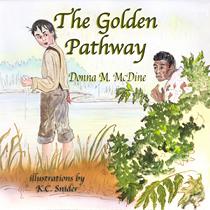
HIGH FIVE #7: Donna McDine and Tips on Getting Published

Gaurdian Angel Publishing, 2010

So you have a picture book out! Here’s a big HIGH FIVE of congratulations to you!
David lives on a farm in the mid-1700’s and is on a quest to free Jenkins, a black slave owned by his Pa. Pa is a cruel man and badgers David for his weaknesses. Using Pa’s negative outlook to his advantage, David uncovers courage from deep within to keep his promise to Jenkins and leads him to eventual freedom down the golden pathway.

Donna currently has two more books under contract with Guardian Angel Publishing, The Hockey Agony and Powder Monkey, but release dates haven't been determined, yet.

Question ONE: How has reading picture books to your children made you a better parent?

The togetherness of curling up with a picture book and watching the curiosity of my children always delighted me. It taught me to view things through the eyes of a child and to enjoy the wonderment of new experiences.

Question TWO: What are three of your favorite picture books (because we all know you have way more than three)?

Hmmm, tough question – below are the picture books that we read over and over again to our children:
Good Night Moon by Margaret Wise Brown
The Hungry Caterpillar by Eric Carle
Madeline by Ludwig Bemelmans

Question THREE: How did you come up with the idea for your debut book? And what was your road to publication like? How many revisions did your manuscript undergo, if you kept count? Did you have an agent? How many publishers did you submit to before getting an acceptance letter?

I have always enjoyed American History and when the opportunity arose to create an outline for a book through the Institute of Children’s Literature, I immediately gravitated to the Underground Railroad. Everyone’s road to publication takes a different journey and The Golden Pathway started out as a short story contest submission to the 77th Writer’s Digest Writing Competition and after placing 12th in the Children’s/Young Adult category I met Lynda Burch of Guardian Angel Publishing at the Muse Online Writers Conference. We discussed the expansion of The Golden Pathway and after several rounds of edits Lynda offered me my first children’s book contract. As for an agent, I do not have one. The Golden Pathway was submitted to three different children’s magazines all resulting in rejection before the acceptance from Lynda Burch.

Question FOUR: How might teachers use your book in the classroom?
To enhance the subject matter of the Underground Railroad a teacher’s guide is currently in development with the National Writing for Children Center homeschool specialist, Amy O’Quinn, which will aide teachers within their curriculum guidelines.  The guide will include different topics for each major subject – Language Arts (English), Math, Social Studies, and Science. And to round out the guide a section on Art activities will be included. To assist the educator and student in getting to know the author and illustrator an interview with both will be also be included. More details forthcoming at my blog – http://www.thegoldenpathway.blogpsot.com.

Question FIVE: What are some writing tips you can offer to writers seeking publication?

Read the genre you would like to write for and read constantly. Study the publisher website for submission guidelines and their current catalog to get a sense of their direction. Follow guidelines to a “T”, especially word count. Publishers receive hundreds, even thousands, of submissions per month and if a writer cannot follow specific submission guidelines, it often results in instant rejection.

My PhotoChristie, thank you for interviewing me, it’s been a pleasure visiting with you.

Thanks for joining me! I wish you lots of success in your future endeavors!

Wednesday, May 4, 2011

Picture Book Vocabulary: Fun with Pirates

This week's READ-4-LUCK pick is How I Became a Pirate by Melinda Long and illustrated by David Shannon.
Jeremy Jacob joins Braid Beard and his pirate crew and finds out about pirate language, pirate manners, and other aspects of their life.
Publisher: Harcourt, Inc.
Year: 2003
Word Count: 958
Book Level: 3.1

RATINGS
CHILDREN: My son loves saying each phrase the crew repeats after Braid Beard. "And I didn't even bother to ask about a good-night kiss." He liked that line, too.

PARENTS:  Full of fun. Teaches manners (but not really) in an oh, so subtle way. Involves sand-castle building, treasures of gold, reading, brushing teeth, goodnight kisses, bedtime rituals, imagination, and lots of play. It's lots of fun to read in a pirate-y tone of voice. Aargghh!

TEACHERS:  Can you say vocabulary lesson? Landlubber, scurvy dog, bellowed, hatch, hearties, swabbing the decks, Jolly Roger, yonder, etc. So much fun! Could teach plot and story, too.

WRITERS:  I'm looking forward to taking a closer look at the dialogue tags used in this one. And a map of the plot points.

Enjoy! And keep on keepin' on...

Monday, May 2, 2011

If You Love to Rhyme

If you love to rhyme, check out these great authors:

  • Giles Andreae
  • Mary Ann Hoberman
  • Charlotte Pomerantz
  • Judy Sierra
  • Lisa Wheeler
  • J. Patrick Lewis
  • Alice Schertle
  • Linda Smith
The following types of books tend to gravitate toward a rhyming structure. If your rhyming text doesn't fit one of these, it's still okay, just make sure you have a solid reason for it besides "because kids like rhyme."
  • alphabet books
  • bedtime books
  • comparative books
  • cumulative stories
  • motion/movement themes
  • numbers/counting
  • seasons/months
  • musical themes or elements
  • wordplay, such as puns, onomatopoeia, alliteration, etc.
Have fun rhyming today! Wanna share a quick couplet with us?

Keep on keepin' on...

Saturday, April 30, 2011

Z is for Z End

We have finally reached Z end of Z A to Z Blogging Challenge. And Z end of April. But I'm not going to ZZZZZZZZZ during May. I'll be back to Z regularly scheduled blogging program:

  1. Mondays - On writing...
  2. Wednesdays - On picture books... (Z Read 4 Luck book review, recommendation, and mini writing lesson)
  3. Saturdays - On life... (High Five interviews, Pot-O-Gold blogger awards, Pass Z Paper, and contests...)
And I'll leave you with Z best ending of all in classic picture book literature..."and it was still hot."

Who knows which book that comes from?

Keep on keepin' on...

Friday, April 29, 2011

Y is for YOUR Pot-O-Gold Blogger Award for April

BLOG TITLEHere YE, here YE...announcing YOUR Pot-O-Gold Blogger Award...

If you love books, then go visit I Am a Reader, Not a Writer. With a weekly book giveaway, it has just over 3,400 followers. The format of the site is clean, simple, and fresh. The tabs at the top make it simple to navigate throughout the site. This isn't a blog that gives writer advice, but definitely gives lots of reviews. Most genres are included. There are lots of Blog Hops you can participate in as well. Occasionally you will find wonderful interviews with writers. If you haven't heard of this site, then take a moment to check out this popular blog. You may get hooked and want to visit every week!

The story behind the award.
Congratulations!


 Here are the rules:
  1. Say thank you to the person who gave it to you.
  2. Write a post and include the image of the award, a link to the person's blog who gave it to you, and a link to my blog, WRITE WILD. (Copy and paste the rules in your post.)
  3. Award four bloggers this award and tell why each is a Pot-O-Gold! (If you receive this award more than once, you only have to forward it the first time.)
  4. Share four simple things about yourself: 1-a time you had to exercise FAITH, 2-something you HOPE for, 3-something (or someone) you LOVE, and 4-a time when you felt LUCK.

Keep on keepin' on...

Thursday, April 28, 2011

X is for Extra! Extra! Read All About It!

Finally, my promised book review of Kristi Holl's latest book, More Writer's First Aid: Getting the Writing Done.

Before I knew who Kristi Holl was, I had purchased a copy of her book, Writer's First Aid. After following her blog for some time now, I had the exciting opportunity to review her new book, More Writer's First Aid. Just like her blog, Kristi consistently delivers hope "to ease the pains of the writing life and help make your writing dreams come true." If you struggle with consistency, focus, time, fear, setbacks, inspiration, or family commitments, then this is definitely the book for you. It is divided into four main sections with twelve short articles, or chapters, in each section. My favorite chapter is "Breaking the Procrastination Cycle." I never knew that procrastination happened in stages and that they were predictable. I'm still trying to identify my own specific problems and the root causes. More Writers First Aid is a book to read and re-read year after year. Encouragement goes a long way to help us persevere until we're published. If that's your goal, then you definitely need this book. And if you're already published, Kristi's advice will provide the encouragement and inspiration you need to get published again and again.

And for Mother's Day, I'm going to buy a hard copy from Amazon.com for myself. The digital PDF version just doesn't do it for me.

Keep on keepin' on...

AddToAny

Link Within

Related Posts Plugin for WordPress, Blogger...